

The Hell Heron of Niger: Discovering Spinosaurus mirabilis
The Hell Heron of Niger: Discovering Spinosaurus mirabilis
Paleontology has reached a historic milestone with the announcement of the first new Spinosaurus species discovered in over a century. Led by Professor Paul Sereno and his team at the University of Chicago, the discovery of Spinosaurus mirabilis in the Sahara Desert of Niger has fundamentally shifted our understanding of how these prehistoric titans lived and hunted.
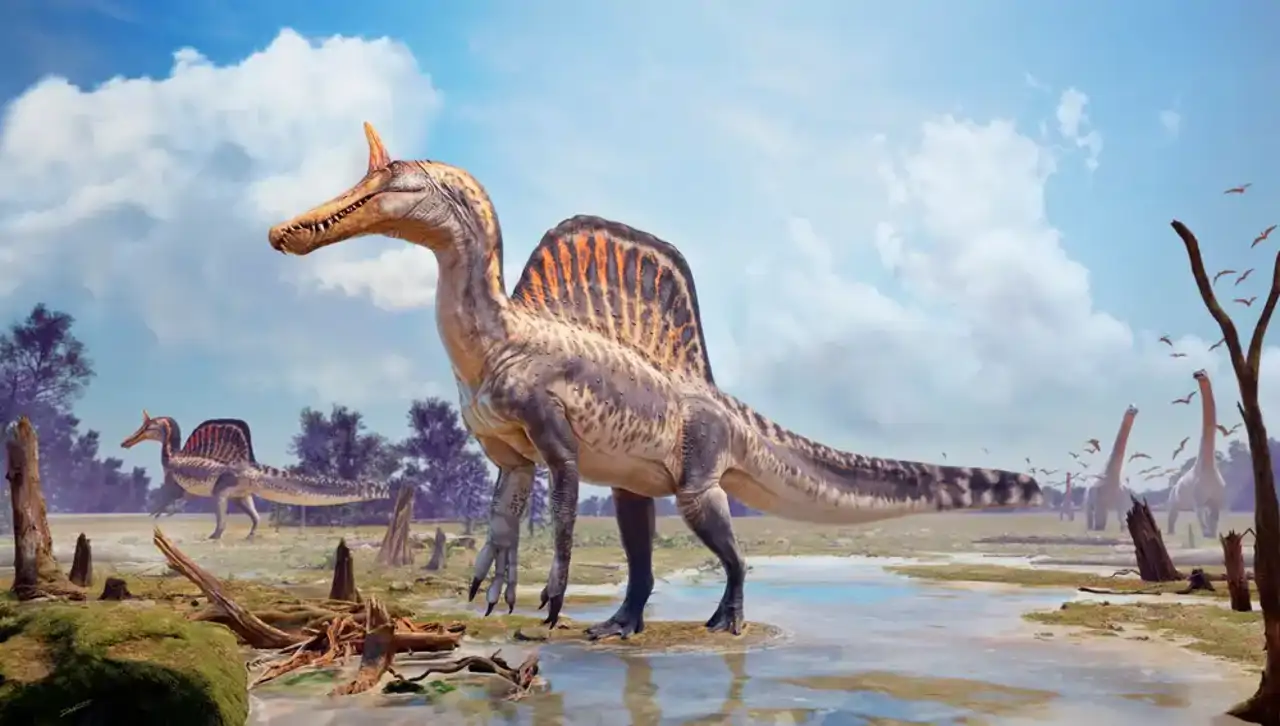
Living approximately 95 million years ago during the Late Cretaceous period, Spinosaurus mirabilis was a massive predator, reaching lengths of 12 meters and weighing up to 7 tons. While its cousin, Spinosaurus aegyptiacus, is famous for its coastal associations, this new find reveals a predator that dominated the inland river systems of Africa.
The Scimitar Crest: A Beacon of the Sahara
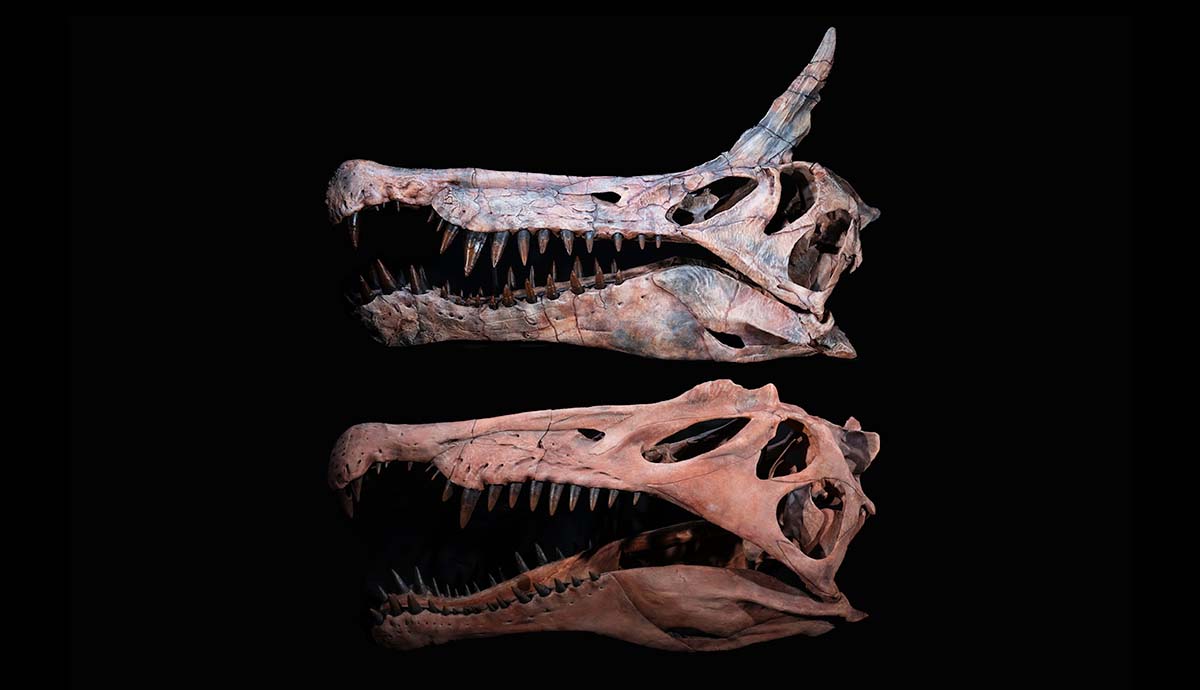
The most striking feature of Spinosaurus mirabilis is its cranial anatomy. Unlike any other spinosaurid, this species possessed a 50 cm tall head crest shaped like a scimitar. Scientific analysis of the bone texture and vascular canals suggests this crest was sheathed in keratin and may have been brightly colored. This suggests the crest served as a vital tool for display, species recognition, and territorial signaling among the riverbanks of the ancient Sahara.

Artist: Dani Navarro
Anatomy of a Fish Trap
Beyond its ornate crest, Spinosaurus mirabilis featured a revolutionary dental adaptation. It is the first dinosaur discovered with interdigitating teeth, a specialized "fish trap" where the upper and lower teeth lock together perfectly when the jaw closes. This anatomical trait, previously seen only in pterosaurs and marine reptiles like ichthyosaurs, allowed the dinosaur to grip slippery aquatic prey with lethal efficiency.

The Hell Heron of the Jungle
For years, the scientific community has debated whether spinosaurs were fully aquatic pursuit predators or shoreline hunters. The discovery of Spinosaurus mirabilis at the Jenguebi site in Niger, located hundreds of kilometers from the ancient Tethys Sea coastline, provides a definitive answer. This species was an inland specialist, living in forested river environments alongside long-necked titanosaurs.
Professor Sereno describes the animal as a "hell heron." With its sturdy hind limbs and elongated snout, Spinosaurus mirabilis likely waded into shallow waters up to two meters deep, stalking the massive fish of the Cretaceous. This discovery suggests that spinosaurs were ecologically versatile, inhabiting a range of environments from coastal deltas to deep inland jungles.
A New Branch on the Spinosaur Tree
While Spinosaurus aegyptiacus and Spinosaurus mirabilis were contemporaries, they represent distinct evolutionary paths. The Nigerien species possessed longer hind limbs and a more elongated snout compared to its Egyptian relative. These differences highlight a stepwise radiation of spinosaurids, where different species adapted to specific niches across the African continent.
The "Hell Heron" discovery marks the end of the "aquatic only" hypothesis and opens a new chapter in dinosaur research. As more fossils are prepared and scanned, we continue to learn about the astonishing diversity of the world's most mysterious predatory dinosaurs.
This article is part of our ongoing work on a new all-in-one prehistoric app. Readers can already sign up for early access here.